



Shopping Cart
There are no more items in your cart





.jpg)
.jpg)
.jpg)









- El Gnomo
- News
- 0 likes
- 158 views
- 0 comments
PK 13/14 – What Is It and Why Is It So Popular?
PK 13/14 is a fertilizer containing elevated levels of phosphorus (13%) and potassium (14%). These two nutrients play a crucial role during the flowering and fruiting stages of plant development.
As plants enter their reproductive phase, their demand for phosphorus and potassium increases significantly. This is why many growers use PK 13/14 as a supplement to their regular feeding program.
How Does Phosphorus Work?
Phosphorus is responsible for many energy-related processes within the plant. It contributes to root development, cell formation, and overall flower and fruit production.
The main functions of phosphorus include:
-
Supporting healthy root growth
-
Assisting energy transfer within the plant
-
Promoting flowering processes
-
Contributing to flower and fruit formation
Without adequate phosphorus, plants may struggle to reach their full flowering potential.
Why Is Potassium Important?
Potassium is equally important during flowering. It regulates water movement, nutrient transport, and several metabolic processes essential for plant health.
Benefits of potassium include:
-
Improved nutrient transport
-
Better water regulation
-
Increased resistance to environmental stress
-
Enhanced flower and fruit quality
-
Support for overall plant metabolism
Together, phosphorus and potassium create the foundation for healthy flowering and productive harvests.
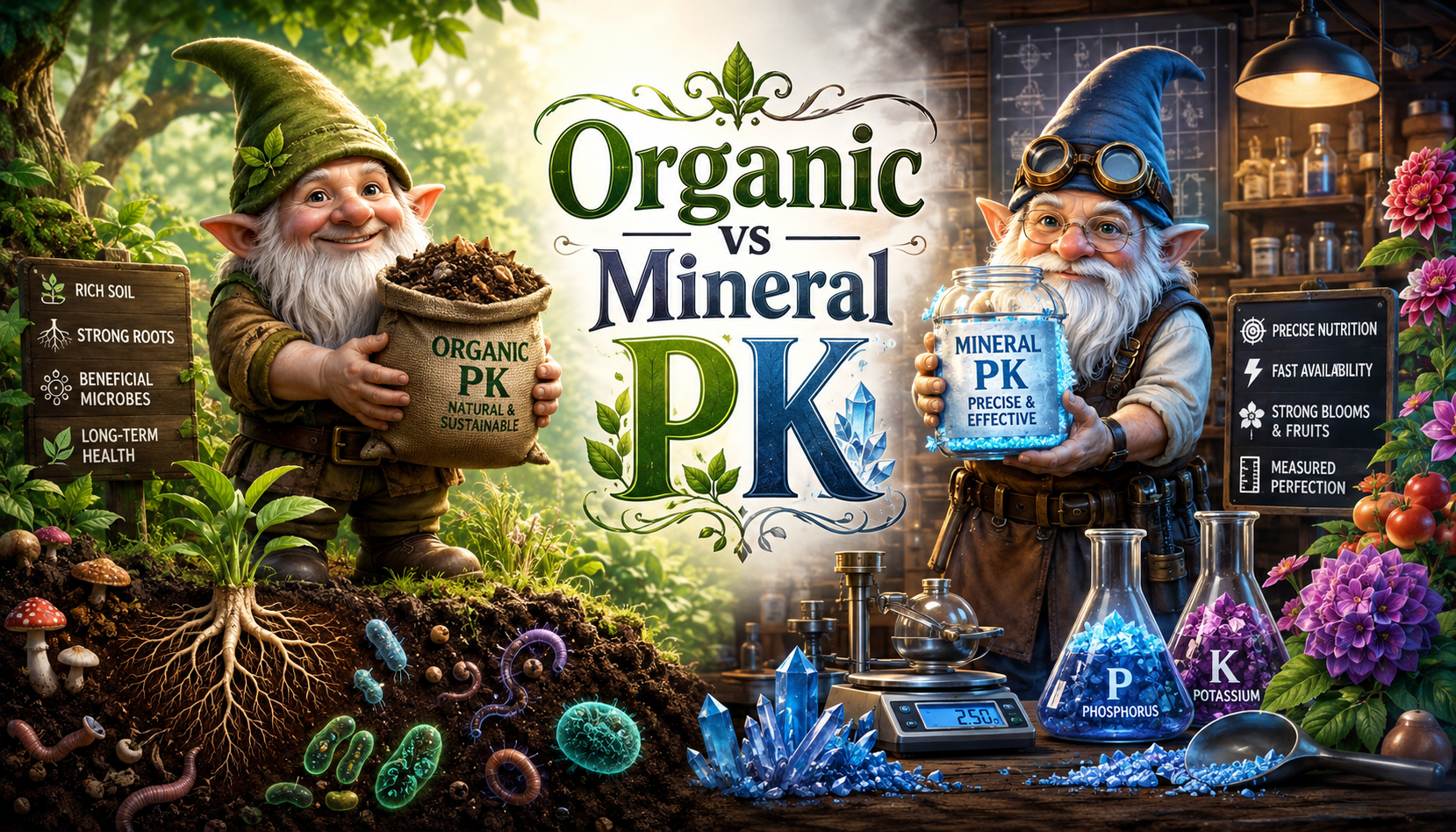
PK 13/14 – Mineral or Organic?
Although phosphorus and potassium can be supplied through both mineral and organic fertilizers, the way these nutrients become available to plants differs significantly.
Mineral PK Fertilizers
Mineral fertilizers provide nutrients in a form that is immediately available for root uptake. This allows plants to respond quickly to feeding.
Advantages of mineral PK fertilizers:
-
Fast nutrient availability
-
Quick plant response
-
Precise feeding control
-
Easy correction of deficiencies
For this reason, most traditional PK 13/14 products available on the market are mineral-based.
Organic PK Fertilizers
Organic fertilizers release nutrients more slowly. Before phosphorus and potassium become available, organic matter must be broken down by beneficial microorganisms living in the growing medium.
Advantages of organic PK fertilizers:
-
Gradual nutrient release
-
Improved soil structure
-
Support for beneficial microbial life
-
Reduced risk of overfeeding
In simple terms, mineral fertilizers provide faster results, while organic fertilizers help build a healthier and more biologically active growing environment.
Are There Alternatives to PK 13/14?
Yes. Several other phosphorus and potassium supplements are available, including PK 9/18, PK 10/20, PK 12/12, and PK 15/20 formulations.
Many modern flowering boosters also contain amino acids, seaweed extracts, humic substances, and trace elements designed to support plant metabolism during flowering.
Despite the availability of alternative products, PK 13/14 remains one of the most widely recognized and trusted flowering supplements used by growers around the world.
Conclusion
PK 13/14 is a proven source of phosphorus and potassium designed to support plants during flowering and fruiting. Whether you choose a mineral or organic approach, ensuring an adequate supply of these essential nutrients can help plants perform at their best throughout the flowering stage.
Comments (0)