


Shopping Cart
There are no more items in your cart



.jpg)
.jpg)
.jpg)




- Gnom
- Medyczna Marihuana
- 0 likes
- 821 views
- 0 comments

What you'll read about in this post:
☺ What is CBD and where does it come from?
☺ What diseases can be cured with marijuana?
☺ How does marijuana with a high CBD content affect humans?
☺ What kind of light do cannabinoids prefer the most?
☺ It will take you less than 4 minutes to read. Enjoy!
CBD. What is it? Where does it come from?
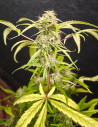
CBD plants are hybrids. Breeders have managed to create original CBD varieties with a very high CBD to THC ratio, from 15:1 and higher.
Medical marijuana, or rather, CBD-rich marijuana, has become increasingly popular recently, which is not very encouraging (not very much, because there's still not much you can do). Medical marijuana is sought after by "regular users," but it sparks particular interest among people suffering from various ailments that this extraordinary plant can help them with.
Around the world, more and more people suffering from various ailments are growing CBD-rich marijuana strains. They report excellent results for a variety of conditions, including:
- Multiple Sclerosis
- Crohn's Disease
- Parkinson's Disease
- Arthritis
- Drug-Resistant Epilepsy
- Neuralgia
- Depression
- Anorexia
- Cancer
- and many, many more…
Currently, strains with a 1:1 THC:CBD ratio have become the most popular. As we are witnessing the global cannabis revolution firsthand, and much research is ongoing, this isn't a given, but it seems that this ratio provides the most comprehensive benefits for most consumers – both medical and recreational.
Physically, it soothes pain, provides relief from various ailments, and provides a pleasant feeling in the body.
Mentally, it calms, allowing for clarity and clarity of thought. The consumer doesn't feel intoxicated or glued to the seat, as is the case with some shelf-stable strains with high THC and negligible CBD.
And what did your great-grandfather smoke?
Slightly older consumers, veteran cannabis enthusiasts, sometimes share sentimental confessions that CBD strains remind them of strains from the 1970s.
This suggests that the strains of "our great-grandfathers," while not yet hybrids with sometimes terrifying potency, were naturally richer in CBD. Today, a strain containing 4% or more is classified as high in CBD.
What percentage did the old marijuana strains contain?
This remains a mystery, as we don't have analytical documentation of cannabis from those years. Therefore, we must trust the experiences of connoisseurs who have had the opportunity to try old strains, such as marijuana seeds from connoisseur resources, and modern hybrids. We rely on their organoleptic, sensory experiences.
CBD with family.
Cannabinoids are not just CBD.
We may soon be witnessing a revolution in the world of medical cannabis. For generations, persistent breeders have been recording cannabinoid levels in their plants. Over time, it was noticed that some plants have elevated concentrations of more than just CBD.
THCV, CBDV, and CBG – these are cannabinoids that accompany THC and CBD. A family of hemp cannabinoids.
Currently, breeders are tasked with stabilizing the genes of newly emerging varieties, while we remain to wait and see what their applications and effects will be.
CBD isn't a horse, it doesn't necessarily kick.
Some people are disappointed with CBD strains, but this is mainly because, unfamiliar with the effects of marijuana high in CBD and lower in THC, they expected a different experience than they received. Simply put, they wanted a kick, a thrill, and a powerful experience, but that's not how it works.
Strains with high CBD levels typically produce a more delicate experience, described by many as more pleasant, plush, and smoother than their lower-CBD counterparts.
How does light relate to cannabinoid concentration?
The best light for cannabis (and all other plants, animals, and humans) has always been and always will be sunlight—there's no doubt about that.
However, the question of which artificial light best replaces it has long been raised.
American growers have been testing various light sources and the cannabinoid levels achieved by plants grown under them for years. Marijuana seeds are tested from germination to harvest. The same plants, clones from a single mother, can have significantly lower cannabinoid concentrations, or higher, depending on the type of lighting.
Unfortunately, HPS lamps don't perform well in such tests, reducing cannabinoid levels in plants (including THC). This is because their spectrum was never intended for cannabis cultivation.
Currently, growers achieve the best results under LED grow lights whose spectrum is tailored to the needs of cannabis plants. This results in higher concentrations of CBD, THC, and other cannabinoids.
Collector's Greetings! :)
Comments (0)